Call me on the Banana Phone, Grandma!

by Penny Cook

Sibylesque Imagination Quote

I love technology. Well, I love that I get photos of my grandchildren on my smart phone!! The world has changed. It used to be that the grandmother was retired, or never had to work, so she didn’t need photographic documentation of what her grandchildren were up to because she was there!! Either in a visiting capacity or sometimes as a carer,

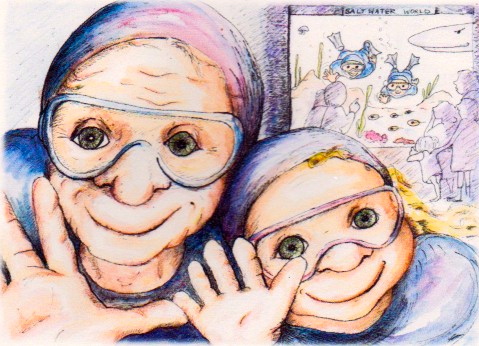
But, as a full time working grandparent in 2014, I love the photos. I love that I am included in the stories of their play. Although I’m not there I get to see when the 5-year-old decides to be Tarzan and his 9-month-old sister is cast as Jane. He in his underpants and she in her nappy. I get to see her diving into an upturned basket and emerging with an Octonaut. I get to see Tarzan reading a book and Jane looking lovingly on. I get to be delighted with their play.

I wonder, if we have forgotten the importance of play.

Sibylesque Banana Phone

If children haven’t had lots of opportunities to ‘play’, to pretend a banana is a phone or pencils on the front of their bikes are headlights, then we have a serious problem with literacy. We know we are hard wired for language, but not for reading and writing. When children participate in ‘symbolic play’ (the banana for the phone), they are beginning to understand about symbols. They are learning that you can substitute one thing for another and transfer meaning. Eventually, they will understand those squiggles on a page represent the words we use to communicate. While they’re playing they are also talking and building a bank of words they can use to navigate the world, have their needs met and communicate their thinking. There is a body of research that strongly suggests if children don’t have quality verbal interactions with adults, by the time they are three years old they can be seriously disadvantaged in the literacy journey.

How do children ‘get’ these quality interactions? Well, there are lots of ways. Reading stories together is one. Being available to listen and respond to the wonderful life theories children are constructing is another. Singing is possibly neglected in the literacy world, but so important. Young children are very forgiving. They are not yet music critics so don’t care what you sound like. They just like to sing together.

Sibylesque Iimaginary Train

So are we putting the cart before the horse with our expectations about reading and writing? Do we have an understanding of how young children learn? Are we rushing children in to the ‘academic’ world and are we taking away the very substance of how they learn – play? Have we forgotten the connection between symbolic play and the ‘valued’ literacies of reading and writing?

How can we reclaim play for children? Well Grandparents, rip the sheets from the bed and string them between the couch and the recliner. Get in that cubby with the kids. Drink copious cups of tea. Be the dog, the baby, the mum, the dad, sister, brother or whatever. You are building readers and writers…. And don’t let anyone tell you anything different.

…………………………………………………………………………..

……………………………………………………………………………………
Penny CookPenny Cook has been an early childhood educator for over 30 years. She loves to travel  – anywhere. Penny is a mother and ‘Nan Pen’, who is continuously fascinated and amazed by her two young grandchildren.  She has always wanted to live in  a tree house by the beach …..it’s never too late!!

Photo source: Smatoday blog, Vic Museum and ipad App store.

HOME

……….

Hey Grandma, try this … build your grandchild’s imagination!

by Penny Cook

Sibylesque bob Newhart quote laughterWho could have ever have predicted that when recycle bins were installed in homes and offices all over Australia, the future creativity of the nation would be under threat! Don’t get me wrong. Recycling is the right thing to do for the planet and, I can tell there has been a huge change in social behavior because early childhood settings all over the country are suffering from a lack of cereal boxes, toilet rolls, milk cartons (remember them), egg cartons, corks and the like!! All of which are ‘gold’ to the imaginations of our youngest innovators.

Sibylesque iPod kidA natural part of how children learn is to make sense of the world they’re experiencing by re presenting their thinking. That’s why they pretend to be someone they’re not (dramatic play), use bananas as telephones and understand that 3 cereal boxes and 2 toilet rolls is really a robot. Without ready access to a range of discarded but potentially fabulous resources, children will miss out on opportunities to be creators and innovators.

What used to go to preschools and schools as ‘junk’ and was transformed into amazing creations, now ends up in recycle centres to be turned into toilet paper, envelopes and tyres. Early years settings are crying out for recycled goods. I have seen teachers guiltily deconstruct a mermaid that didn’t go home with its owner, to recycle the recycling!! Without the ‘junk’ the alternative is pressure to purchase pre packaged expensive bags of coloured sticks, straws, feathers and sequins or alternatively, pre packaged expensive natural materials. Either way children need to and will be creative.

In northern Italy, the city of Reggio Emilia, well known internationally for their early childhood centres, has developed Remida, a centre for organizing and displaying discarded materials to be used as creative resources. Schools can go there and stock up on all kinds of interesting recycled materials, which then get translated into the most amazing creations. There is an endless supply because businesses and industries work in partnership with the city and recognize the importance of the creative process in learning. I’m wondering, is it possible to use face book and social media to influence another change in social behavior –putting in a ‘create and innovate’ step before the recycle depot.

Sibylesque Creative StationOnce at kindy, a child had a plaster cast on his leg. At the same time there was a young boy who didn’t speak. This boy went to the never ending supply of ‘junk’ material, found two milk cartons, cut the bottoms out, opened out the tops and then placed a carton on each leg. That ‘spoke’ to me. It told me this boy wanted to know what it felt like to walk with plaster on his legs. I’d say I was seeing empathy- wanting to understand from another’s point of view. If there wasn’t access to the recycling, I might never have known that about the boy who didn’t speak.

So…tip out the recycling, re badge it as ‘the creative station’, throw in scissors, tape and a glue stick and watch what the kids do!! Or, bundle it up and take it (washed and sorted) to the local early childhood centre or school. The children of Australia will be extremely createful!!

Also check out: how a child’s creativity and imagination helps them deal with anxieties and phobias.

……………………………………………………………………………………

Penny CookPenny Cook has been an early childhood educator for over 30 years. She loves to travel  – anywhere. Penny is a mother and ‘Nan Pen’, who is continuously fascinated and amazed by her two young grandchildren.  She has always wanted to live in  a tree house by the beach …..it’s never too late!!

Photo source: Popsugar, Familysponge

HOME

How did childhood become a prison sentence?

by Kerry Cue

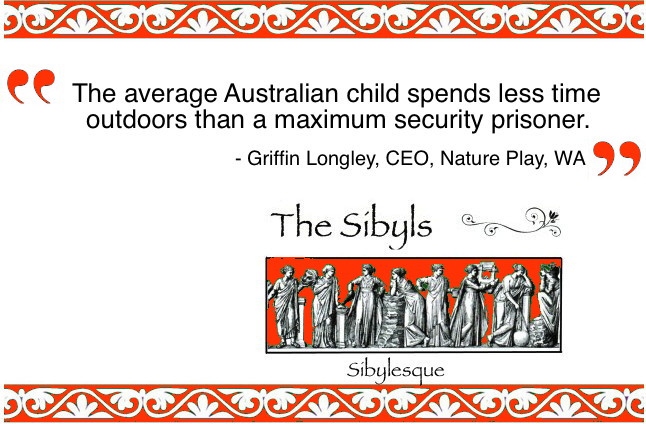
Sibylesque Nature Play Quote

We are the generations, who roamed free. We rode our bikes unsupervised. Explored the neighbourhood. Played in the street. Our grandchildren live indoors. (See The Last Child in the Woods book review) This is cause for great concern. Sibyl Helen Elliott writes about the joys of taking grandchildren into nature. There is another side to this story. Childhood is diminished if children do not experience nature. Now the research confirms our fears.

Results from the Australian State of Play Report, 2012, comprising 8 – 12 year old children, their parents and grandparents published in Primary Focus, the SAPPA (South Australia Primary Principals) Magazine include:

*Indoors: 9 out of 10 kids spend more time playing inside than out.

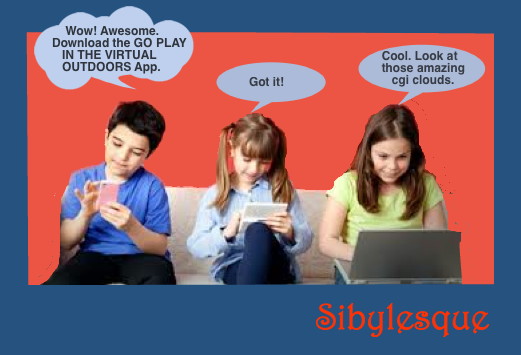
Sibylesque outdoor play app

*A lack of inspiration: 37% of kids run out of ideas for play.

*A lack of time: Afterschool activities limit the time children have to play outdoors.

*A lack of opportunity: 37% of kids report they don’t have anyone to play with outside as almost half the kids they might play with are indoors plugged into technology.

A growing body of research shows us that outdoor play leads to better physical and mental health, has positive effects on cognitive function and learning, and reduces the incidence of behavioural problems.” Maria Zotti, Nature Play, SA.

Peter Dunstan, Principal Kilkenny PS, SA, writes in Primary Focus that outdoor play fosters “wonderment, independence and freedom” as well as “social skills, imagination, creativity and problem solving”.

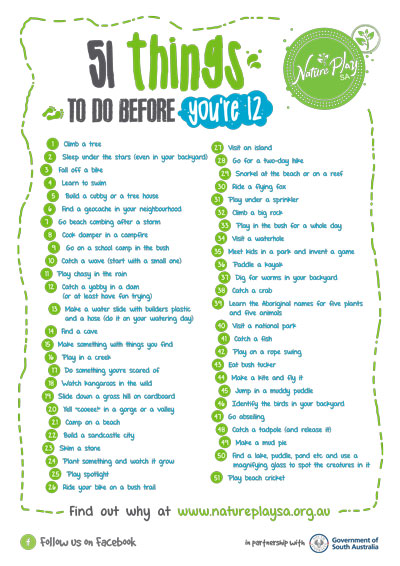
So concerned are the South Australian Primary School Principals they have combined with Nature Play, SA (A NFP organisation) to promote outdoor play. Nature Play, SA has produced this poster: 51 Things to Do before you’re 12. Pass it on!!!!!!!

51things_NPSA

Photo: Unsourced

HOME

Some Grandmas really are Wild Things!

by Honey Clarke

Roman border 2

purple quote 1

You can retire from a job, but don’t ever retire from making extremely meaningful contributions in life.purple quote 2

…………………………………………………………..Stephen Covey, Author

Roman border 2

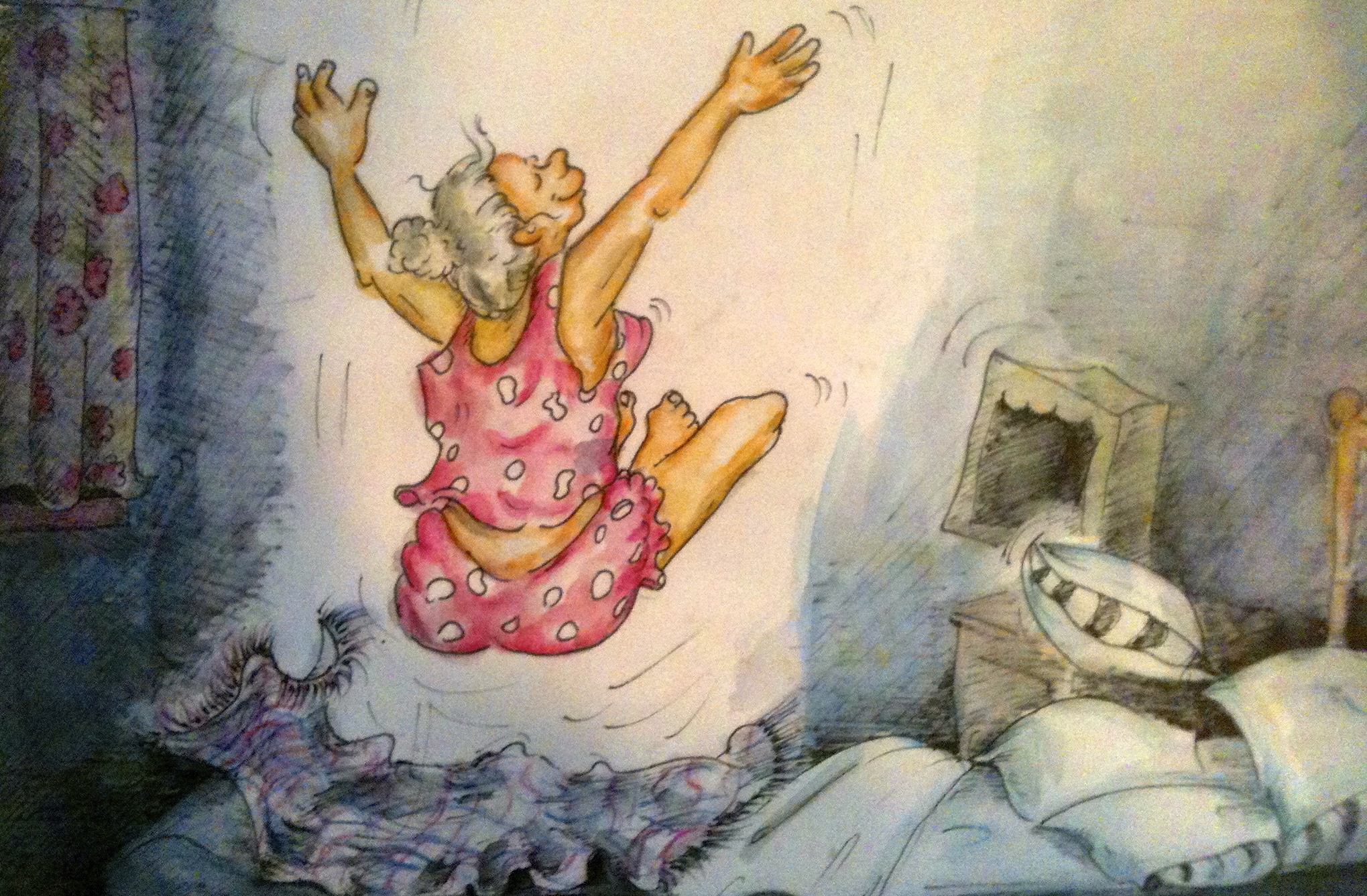
Illustration by Honey Clarke from her book 'My grandma is a Wild Thing'.

Illustration by Honey Clarke from her book ‘My grandma is a Wild Thing’

Australia has been perpetuating ridiculous stereotypes ever since Chips Rafferty came to the screen. His nasal drawl and odd sayings use to make our skin crawl. “We’re nothing like that!” we’d scream. Yet in any movie about Australia, he’d ride on in. Despite what we know to be true, Australians still willingly go with the stereotypes offered. Don’t think so? Just watch how quickly you can become invisible in the workplace, now you’re a woman of “a certain age”.

Grandma Swims by HOney Clarke

Grandma Swims by HOney Clarke

Lately Politicians are hinting that an ageing population is “becoming a significant issue” like Lyssavirus or finding you’d grown a third eye. The Bureau of Statistics gives projections of data pregnant with doom. What none acknowledge is the contribution the ageing give to our country.

 This theme has been a thread in my own work. My friend Marn breaks all the stereotypes and helped inspire my book “My Grandma is a Wild Thing” because she played drums, rode a motorbike and swung from a jungle gym to pose for my drawings. What’s more Marn speaks “Kid” in all its forms – eloquently and with love. She’s a dynamic part of work and family. Yet stereotypes of aging persist.

The Chooks  by Honey Clarke

The Chooks
by Honey Clarke

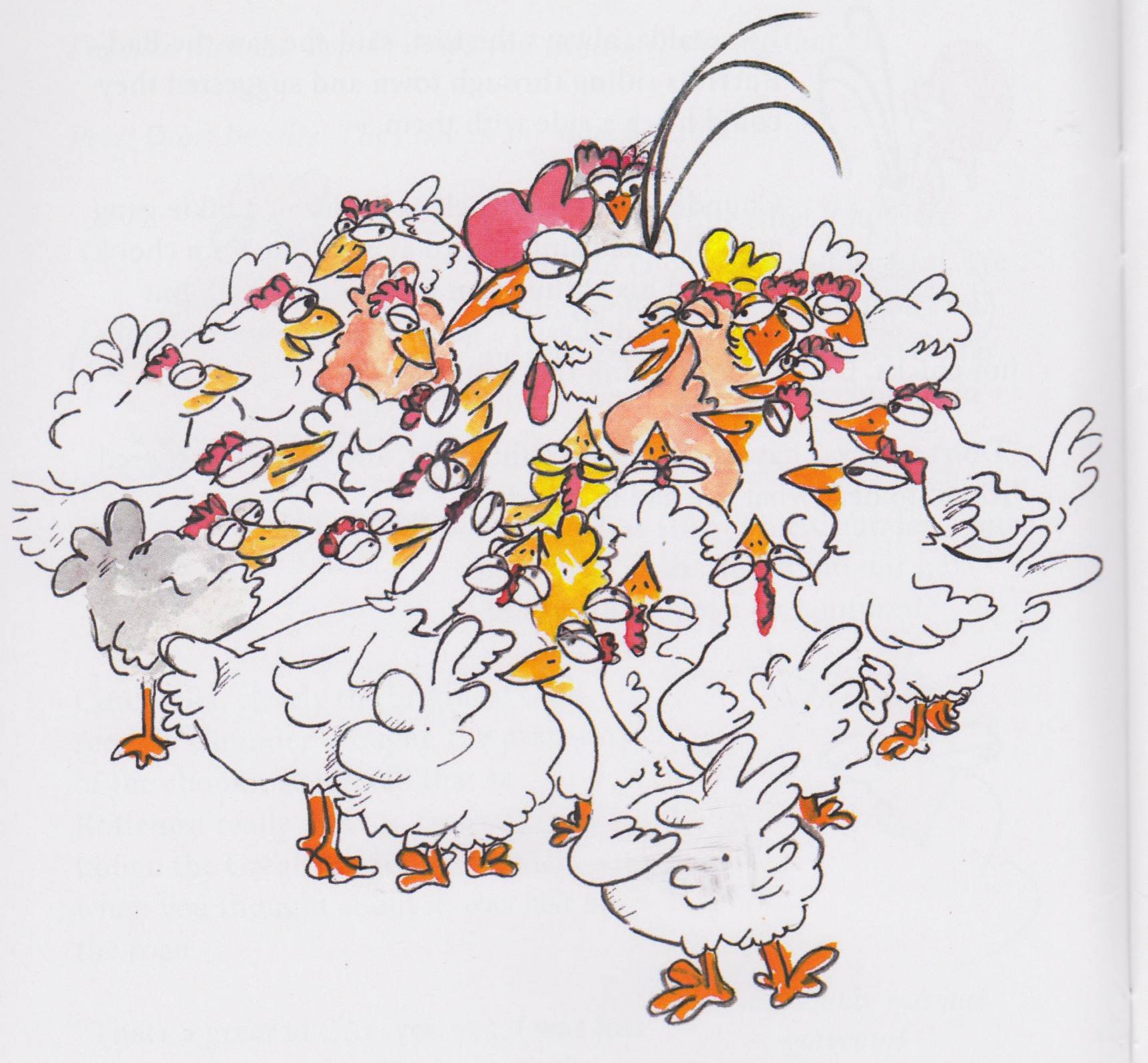
I hatched “The Chook* Book of Wisdom” when a farmer friend was about to go home and dispose of his chooks. The problem? They’d stopped laying. Was he crazy? They were just menopausal – they had heaps of good years. He thought it a hoot. The chooks were saved. Let’s hope we are too.

Australia has to get over the idea that passive earners don’t contribute. Let’s show our currency. Dare to be different. Grasp every opportunity to contribute to the quality of our own lives and in so doing, contribute to the quality of others too.

……………………………………………………………………………………………….

Honey Clarke

Honey Clarke

Honey Clarke lives on the side of a mountain in an extinct crater lake with her partner, the Rock Doctor. She’s an artist, writer and teacher who encapsulates the essence of life in the quick strokes of paint or pen. Honey has two grown up kids and seven grandchildren. She is part-owner in a bamboo farm. She would like to say her hobbies are kite-surfing and abseiling but that would be a lie. Instead she reads, swims, travels, paints and blogs as much as possible. Honey’s blog is Honeyclarkeart. To inquire about Honey Clarke’s art, books or illustraoins contact her at: honeyclarkeartATgmail.com

Gemma Sisia has a big dream to fight poverty through education.

Gemma Sisia has a big dream to fight poverty through education.


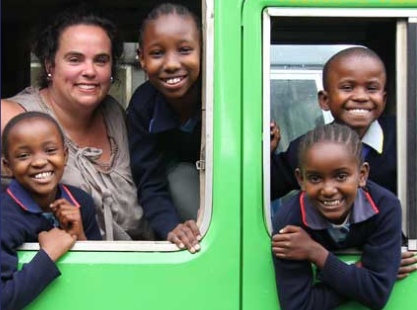
The charity that she and the Rock Doctor champion is St Judes in Tanzania, a brilliant school educating kids out of poverty.

…………………………………………………………………………

…………………………………………………………………………..

Photo Source: Honey Clarke’s Blog and St Jude’s Website.

*Chook is an Aussie colloquialism for a chicken.

HOME

Don’t call me ‘Grandma’

by Kerry Cue

Roman border 2


 purple quote 1   “The reason grandparents and grandchildren get along so well is that they have a common enemy.”purple quote 2

……………………… Sam Levenson, American Humourist, 1911-1980

Sibylesque Signature purple

Roman border 2


…………………………………………………………………………………

Baby Boomers Find the ‘Grandma’ Tag Doesn’t Fit

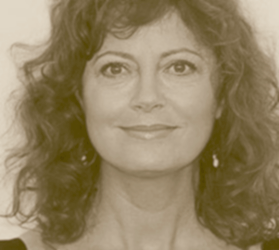
Baby Boomers, apparently, are terrified of being labelled ‘old’. We’re in denial and we refuse to be called grandma. Susan Sarandon (b. 1946), for instance, wants to be called ‘Honey’.

Susan Sarandon B&W

This is not a straightforward issue. Firstly, today a kid can have 4 grandmas, 2 biological grannies and 2 step-grandmamas. Who gets the naming rights? Often, it is first in, first served. So the first-time-grandma may be  competing with an established  grandma-of-3. To avoid the granny wars, she has to find another name.

If both grandmothers opt for the same ‘nanna’ tag, the kid will soon sort you out. I know a little tyke who called his nannas ‘Chippie Nanna’ and ‘Chocie Nanna’. Obviously, they specialised in crisps and chocolate.

May Procession c 1950s Communigate UK

May Procession c 1950s  UK


Secondly, women of my generation have fought to be recognised as individuals. Otherwise, our entire identity is dished out as  stereotypes: girlfriend, fiancee, wife, mother, grandmother…. Are we expected to revert to a generic brand name in our senior years?

Some will be happy with this option but some won’t. I’m one and I’m not even a grandmother. Our grandmothers, much like my grandma and nanna, were stern, hat-wearing, church-going matrons (see left), who often tut-tutted at, well, every fun thing that happened at family gatherings. I don’t care about being a grandmother, but the name would feel like a millstone around my aging-neck.

What are the options?

Nan: My friend Nan says she’s just growing into her own name!!

Mimi: Kim, called Kimmie by the family, said ‘Let the child decide’. He started calling  her ‘Mimi’. She loves it.

Lola: Surprisingly, ‘lola’ is grandma in Filipino (Tagalog). ‘Lolo’ is grandpa. My nephew married the gorgeous, Regina, who is Filipino. His mum gets called ‘Lola Liz’. Now that sounds like a grandma, who is having a damn good time!

Any other suggestions?

The 1950’s photograph came from an unattributed source. More information is welcome.