Call me on the Banana Phone, Grandma!

by Penny Cook

Sibylesque Imagination Quote

I love technology. Well, I love that I get photos of my grandchildren on my smart phone!! The world has changed. It used to be that the grandmother was retired, or never had to work, so she didn’t need photographic documentation of what her grandchildren were up to because she was there!! Either in a visiting capacity or sometimes as a carer,

But, as a full time working grandparent in 2014, I love the photos. I love that I am included in the stories of their play. Although I’m not there I get to see when the 5-year-old decides to be Tarzan and his 9-month-old sister is cast as Jane. He in his underpants and she in her nappy. I get to see her diving into an upturned basket and emerging with an Octonaut. I get to see Tarzan reading a book and Jane looking lovingly on. I get to be delighted with their play.

I wonder, if we have forgotten the importance of play.

Sibylesque Banana Phone

If children haven’t had lots of opportunities to ‘play’, to pretend a banana is a phone or pencils on the front of their bikes are headlights, then we have a serious problem with literacy. We know we are hard wired for language, but not for reading and writing. When children participate in ‘symbolic play’ (the banana for the phone), they are beginning to understand about symbols. They are learning that you can substitute one thing for another and transfer meaning. Eventually, they will understand those squiggles on a page represent the words we use to communicate. While they’re playing they are also talking and building a bank of words they can use to navigate the world, have their needs met and communicate their thinking. There is a body of research that strongly suggests if children don’t have quality verbal interactions with adults, by the time they are three years old they can be seriously disadvantaged in the literacy journey.

How do children ‘get’ these quality interactions? Well, there are lots of ways. Reading stories together is one. Being available to listen and respond to the wonderful life theories children are constructing is another. Singing is possibly neglected in the literacy world, but so important. Young children are very forgiving. They are not yet music critics so don’t care what you sound like. They just like to sing together.

Sibylesque Iimaginary Train

So are we putting the cart before the horse with our expectations about reading and writing? Do we have an understanding of how young children learn? Are we rushing children in to the ‘academic’ world and are we taking away the very substance of how they learn – play? Have we forgotten the connection between symbolic play and the ‘valued’ literacies of reading and writing?

How can we reclaim play for children? Well Grandparents, rip the sheets from the bed and string them between the couch and the recliner. Get in that cubby with the kids. Drink copious cups of tea. Be the dog, the baby, the mum, the dad, sister, brother or whatever. You are building readers and writers…. And don’t let anyone tell you anything different.

…………………………………………………………………………..

……………………………………………………………………………………
Penny CookPenny Cook has been an early childhood educator for over 30 years. She loves to travel  – anywhere. Penny is a mother and ‘Nan Pen’, who is continuously fascinated and amazed by her two young grandchildren.  She has always wanted to live in  a tree house by the beach …..it’s never too late!!

Photo source: Smatoday blog, Vic Museum and ipad App store.

HOME

……….

Hey Grandma, try this … build your grandchild’s imagination!

by Penny Cook

Sibylesque bob Newhart quote laughterWho could have ever have predicted that when recycle bins were installed in homes and offices all over Australia, the future creativity of the nation would be under threat! Don’t get me wrong. Recycling is the right thing to do for the planet and, I can tell there has been a huge change in social behavior because early childhood settings all over the country are suffering from a lack of cereal boxes, toilet rolls, milk cartons (remember them), egg cartons, corks and the like!! All of which are ‘gold’ to the imaginations of our youngest innovators.

Sibylesque iPod kidA natural part of how children learn is to make sense of the world they’re experiencing by re presenting their thinking. That’s why they pretend to be someone they’re not (dramatic play), use bananas as telephones and understand that 3 cereal boxes and 2 toilet rolls is really a robot. Without ready access to a range of discarded but potentially fabulous resources, children will miss out on opportunities to be creators and innovators.

What used to go to preschools and schools as ‘junk’ and was transformed into amazing creations, now ends up in recycle centres to be turned into toilet paper, envelopes and tyres. Early years settings are crying out for recycled goods. I have seen teachers guiltily deconstruct a mermaid that didn’t go home with its owner, to recycle the recycling!! Without the ‘junk’ the alternative is pressure to purchase pre packaged expensive bags of coloured sticks, straws, feathers and sequins or alternatively, pre packaged expensive natural materials. Either way children need to and will be creative.

In northern Italy, the city of Reggio Emilia, well known internationally for their early childhood centres, has developed Remida, a centre for organizing and displaying discarded materials to be used as creative resources. Schools can go there and stock up on all kinds of interesting recycled materials, which then get translated into the most amazing creations. There is an endless supply because businesses and industries work in partnership with the city and recognize the importance of the creative process in learning. I’m wondering, is it possible to use face book and social media to influence another change in social behavior –putting in a ‘create and innovate’ step before the recycle depot.

Sibylesque Creative StationOnce at kindy, a child had a plaster cast on his leg. At the same time there was a young boy who didn’t speak. This boy went to the never ending supply of ‘junk’ material, found two milk cartons, cut the bottoms out, opened out the tops and then placed a carton on each leg. That ‘spoke’ to me. It told me this boy wanted to know what it felt like to walk with plaster on his legs. I’d say I was seeing empathy- wanting to understand from another’s point of view. If there wasn’t access to the recycling, I might never have known that about the boy who didn’t speak.

So…tip out the recycling, re badge it as ‘the creative station’, throw in scissors, tape and a glue stick and watch what the kids do!! Or, bundle it up and take it (washed and sorted) to the local early childhood centre or school. The children of Australia will be extremely createful!!

Also check out: how a child’s creativity and imagination helps them deal with anxieties and phobias.

……………………………………………………………………………………

Penny CookPenny Cook has been an early childhood educator for over 30 years. She loves to travel  – anywhere. Penny is a mother and ‘Nan Pen’, who is continuously fascinated and amazed by her two young grandchildren.  She has always wanted to live in  a tree house by the beach …..it’s never too late!!

Photo source: Popsugar, Familysponge

HOME

How did childhood become a prison sentence?

by Kerry Cue

Sibylesque Nature Play Quote

We are the generations, who roamed free. We rode our bikes unsupervised. Explored the neighbourhood. Played in the street. Our grandchildren live indoors. (See The Last Child in the Woods book review) This is cause for great concern. Sibyl Helen Elliott writes about the joys of taking grandchildren into nature. There is another side to this story. Childhood is diminished if children do not experience nature. Now the research confirms our fears.

Results from the Australian State of Play Report, 2012, comprising 8 – 12 year old children, their parents and grandparents published in Primary Focus, the SAPPA (South Australia Primary Principals) Magazine include:

*Indoors: 9 out of 10 kids spend more time playing inside than out.

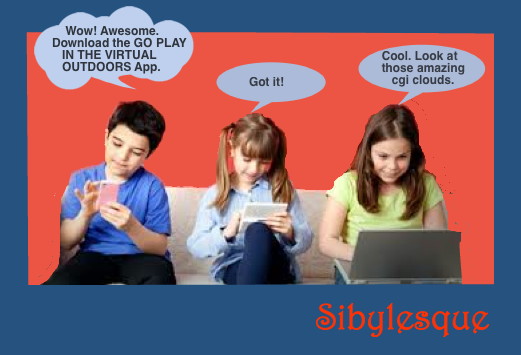
Sibylesque outdoor play app

*A lack of inspiration: 37% of kids run out of ideas for play.

*A lack of time: Afterschool activities limit the time children have to play outdoors.

*A lack of opportunity: 37% of kids report they don’t have anyone to play with outside as almost half the kids they might play with are indoors plugged into technology.

A growing body of research shows us that outdoor play leads to better physical and mental health, has positive effects on cognitive function and learning, and reduces the incidence of behavioural problems.” Maria Zotti, Nature Play, SA.

Peter Dunstan, Principal Kilkenny PS, SA, writes in Primary Focus that outdoor play fosters “wonderment, independence and freedom” as well as “social skills, imagination, creativity and problem solving”.

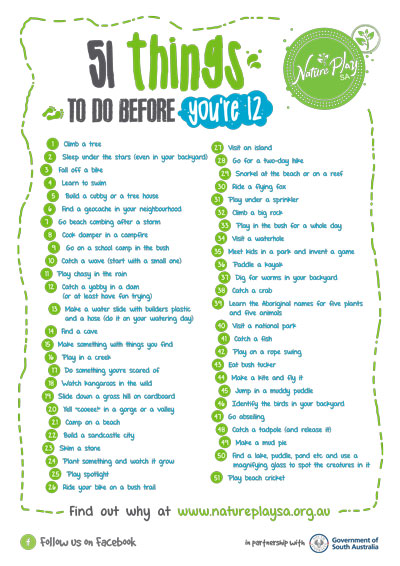
So concerned are the South Australian Primary School Principals they have combined with Nature Play, SA (A NFP organisation) to promote outdoor play. Nature Play, SA has produced this poster: 51 Things to Do before you’re 12. Pass it on!!!!!!!

51things_NPSA

Photo: Unsourced

HOME

Frogs, Thornbills, Crimson Leaves and Cycla-Men: The Many Enchantments of the Natural World

By Helen Elliott

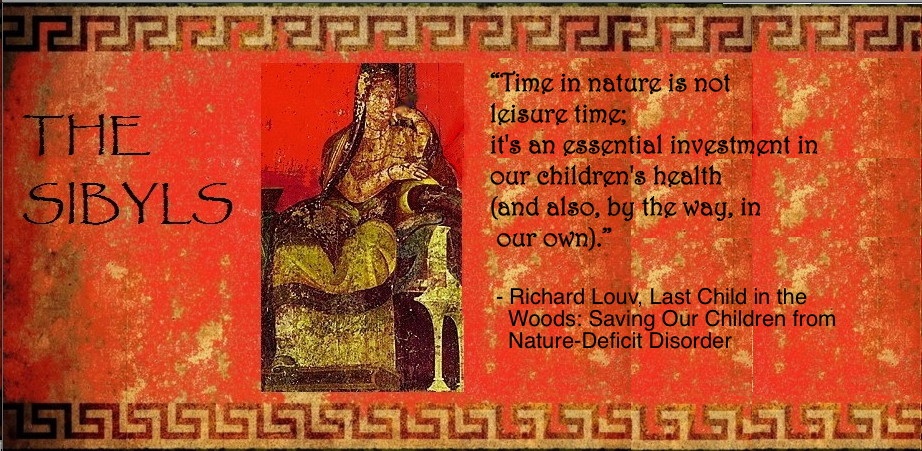
 Sibylesque Richare Louv Quote

Easter was sublime here in the country. It was cold at night and the days remained crisp. The family were staying for a few days and because there were babies and toddlers the house needed to be kept warm, mostly by the open fire that astonished the children. They all live in centrally heated houses.

Outside the garden was modestly, quietly preparing itself for winter. The golden ash no longer dazzled along the drive but it’s leaves made a russet eiderdown for the bright shoots of bulbs beneath. The huge maple by the creek still flies banners of crimson and orange and the children gasp at the size of the leaves. And the shapes. They hold them out against the palms of their hands and make us look. They have seen leaves in books but not like this, scattered across the grass, tumbling in the water.

Two of the children are old enough for an Easter egg hunt, and on Easter Sunday with the mist still blooming above the tallest gums, bundled into their coats, their crazy pink gumboots and cherry- red hats they waited by the kitchen door holding their new buckets. Their parents each hold a swaddled, rosy-checked baby and everyone is wondering where a rabbit might leave eggs. Had I glimpsed him that very morning? Fat? Silver fur? Tall brown ears and a great puff of a tail? I had a few suggestions about where he might have been.

Sibylesque Autumn EnchantmentsI was right. Over by the fence where the climbing rose is finishing the season with a few tawny buds amongst the crowd of rosehips two perfect golden eggs are lying. The little girl’s joyful screams pierce the morning air startling two birds out of hedge. They flap vertically into the sky. Where else would that rabbit go, the children wonder? Under the Irish strawberry? Or maybe if they bent down and lifted the tips of the branches of the Chinese elm where it sweeps the earth and crept into that glade they’d find something? Again their screams of delight, again their sparkling faces.

Olivia rushed to the first of the jelly bushes, certain that the rabbit would have been there. She was enraptured by the jelly bushes because when you shook them, or polished them they wobbled like jelly! To us they are common English box bushes but they’re shaped like small urns and are just the right height for a three year old to shake. Alas, not one golden egg wobbled from the deep green urns.

And nothing was found in the old fountain except an upturned pot. Nothing? Well, there was a tiny striped frog. Half lime and half olive. The girls wondered if he had a name. And shouldn’t he live in the pond? Continue reading article here: Frogs, Thornbills, Crimson Leaves and Cycla-Men- The Many Enchantments of the Natural World

…………………………………………………………….

Helen Elliot 2Helen Elliott is a thoughtful and analytical reader, informed and soulful writer and unyielding literary critic for many Australian newspapers. She is also a dedicated gardener. After down downsizing the family home and moving into an apartment Helen longed for her garden. You will find her insightful thoughts on this experience here.

Photo Source: Stairs marksinthemargin blog.

HOME


The kids have left; the dog has died. Is it time to downsize?

by Helen Elliott

Sibylesque Monet quoteWe decided to downsize. The children had left, the dogs had died, as had one cat. The other was thinking about it. The garden, my adored, beloved garden was making me anxious and there was the problem of Upstairs. Upstairs, where the children had lived so happily all those years was now where I hurled anything I didn’t use but was too lazy to pitch out. Or sentimental. Upstairs was over my head. I never went there if I could help it but it hovered, symbolic of a paralysing weight .

So why not sell when someone knocked on the door, said they were in love with your house and garden and here’s an offer you can’t refuse. We didn’t. In three months we were in a flat.

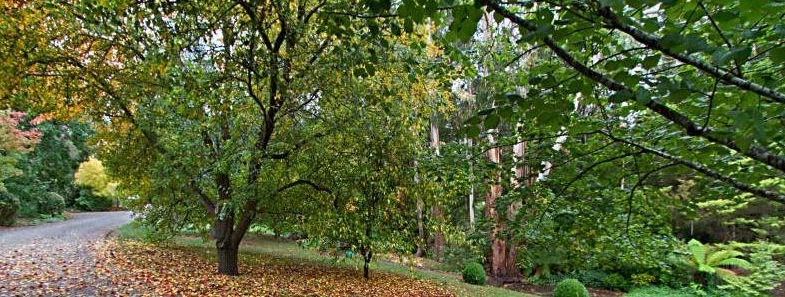
Garden mount-macedon

Oh. What do you do with a grandchild in a flat? Sure, we could walk in the Botanical gardens, find playgrounds, sit in cafes, go to museums. But something was shockingly out of kiltre. These lovely places were public, not personal. I couldn’t say: “Grandma planted that kolkwitzia twenty years ago”. Why was I waking in tears every morning, dreaming of my old garden? And why did I feel my hands and feet were cut off, disabled by my inability to step out onto the earth and into that intimate natural space I had been creating for over two decades?

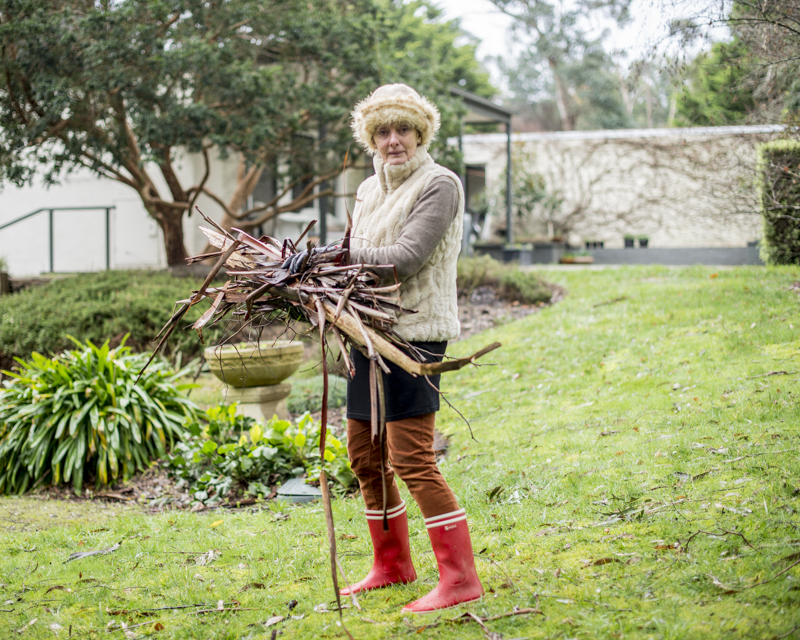
Helen in her garden

Helen in her garden

Life is change, I know this. But my change was in the wrong direction. I heard that word “de-natured” and everything made sense. Without nature at my door I was a shadow of myself. It made me think hard about nature in the lives of my small grand children.

Two years, two flats later we decided to upsize. An acre, a tranquil house, a stream, a pond, a vegetable garden. I have never been happier. And the grandchildren know about this thrilling thing called The Country.

…………………………………………………………………. 

Helen Elliot 2Helen Elliott is a thoughtful and analytical reader, informed and soulful writer and unyielding literary critic for many Australian newspapers. She is also a dedicated gardener.

HOME